
Why Math Engagement in Middle School Matters More Than You Think
Building a strong mathematical foundation during elementary and middle school is one of the most important investments we can make in a student's academic future. Unlike many subjects where topics can stand somewhat independently, math is deeply cumulative. Every new concept rests on the shoulders of the ones that came before it. Fractions lead to ratios. Ratios lead to proportional reasoning. Proportional reasoning leads to algebra. If a student misses a foundational step, the gap doesn't stay small — it widens with every passing year.
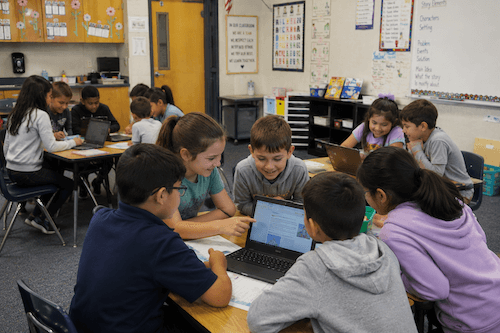
That's what makes sixth grade such a critical turning point. Students at this stage are transitioning from concrete arithmetic to more abstract mathematical thinking, and the shift can be jarring. For many students, this is exactly where math anxiety takes root and motivation begins to fade. The challenge for educators is not simply to teach the content, but to make students genuinely want to engage with it. The answer, for many innovative teachers, lies in project-based learning — or PBL.
What Is Project-Based Learning and Why Does It Work for Math?
Project-based learning is a teaching method where students acquire knowledge and skills by working on a real-world or personally meaningful project over an extended period of time. Rather than sitting through a lecture, taking notes, and completing a worksheet, students are handed a challenge, a goal, or a problem and asked to investigate, design, and create their way to a solution. The math emerges from necessity rather than instruction — and that changes everything.
According to PBLWorks, one of the leading authorities on project-based learning design, the method works because it taps into students' natural curiosity and drive to accomplish something tangible. When students see a clear purpose for what they're learning, retention improves, engagement rises, and the material sticks in ways that traditional instruction often cannot achieve.
For math teachers in particular, PBL offers a rare and powerful opportunity: the chance to show students that math is not a collection of abstract procedures to be memorized, but a living, breathing tool that shapes the world around them every single day.
The Backpack Design Project: A Real-World Math Challenge
One of the most compelling examples of PBL in a sixth-grade math classroom is a unit built around designing a backpack. At first glance, designing a backpack might seem more like an art or engineering project than a math lesson. But look closer and the mathematical thinking required is rich, layered, and deeply aligned with core curriculum standards.
Students working on a backpack design project must grapple with a wide range of mathematical concepts, including:
- Measurement and geometry, as they calculate dimensions, surface area, and volume to ensure the backpack is functional and fits within certain constraints
- Ratios and proportional reasoning, as they scale designs up or down to meet different requirements
- Data analysis, as they survey peers to understand what features are most desired and use that data to inform their design decisions
- Budget and cost estimation, which introduces real-world applications of operations with decimals and percentages
- Logical reasoning and problem-solving, as unexpected challenges arise throughout the design process and students must adapt their approach
The result is a project where math is not the subject of study — it's the instrument of creation. Students aren't learning math and then applying it. They're applying it as they learn it, which creates a fundamentally different relationship with the content.
How PBL Shifts Student Mindsets About Math
Perhaps the most profound outcome of a well-executed PBL unit isn't the finished product — it's the shift in how students perceive themselves as math learners. Students who once dreaded math class begin to see themselves as capable problem-solvers. The question "When will I ever use this?" disappears because the answer becomes obvious in real time.
Teachers who have implemented PBL in their math classrooms consistently report that students who disengage during traditional instruction suddenly come alive during project work. The autonomy, the creativity, and the real-world stakes of a meaningful project create an intrinsic motivation that worksheets simply cannot replicate.
PBL also naturally encourages collaboration, communication, and critical thinking — skills that go far beyond math class and prepare students for the demands of high school, college, and careers. Students learn to explain their mathematical reasoning to peers, defend design decisions with data, and revise their thinking when their numbers don't work out. These are habits of mind that last a lifetime.
Starting a PBL Unit: What Educators Need to Know
For teachers curious about bringing PBL into their math classrooms, getting started doesn't require a complete overhaul of existing curriculum. Many successful PBL units are built around standards that are already being taught — the shift is in how those standards are delivered and experienced.
A few practical steps to begin include identifying a driving question that is open-ended and rooted in authentic context, connecting the project goals to specific math standards, building in checkpoints for formative assessment so that math instruction remains rigorous throughout the project, and creating space for student voice and choice so that ownership remains high from beginning to end.
Professional development resources from organizations like PBLWorks offer structured frameworks that make the design process more manageable for teachers who are new to the approach.
The Bigger Picture: Making Math Feel Relevant at Every Level
The backpack design project is just one example of how project-based learning can transform the math classroom experience. The broader principle applies across grade levels and topic areas. Whether students are designing a garden using area and perimeter, analyzing sports statistics to explore data and probability, or building a budget for a school event using percentages and financial literacy skills, the common thread is the same: math becomes meaningful when it connects to something students genuinely care about.
At a time when math achievement gaps remain a pressing concern across the country, and when student engagement in STEM disciplines continues to be a challenge, PBL offers a research-supported, student-centered path forward. It meets students where they are, activates their curiosity, and builds the kind of deep mathematical understanding that carries them through every grade level that follows.
For sixth-grade teachers, and for educators at every level, the lesson is clear: when students see why math matters, they find the motivation to truly master it.