Two Things Can Be True at Once
Every May arrives carrying a kind of beautiful contradiction. Flowers bloom while frost warnings still linger overnight. Calendars fill with birthdays, Mother's Day, Mental Health Awareness Month, and Memorial Day — celebration and reflection layered on top of one another in the same few weeks. It is a month that refuses to be simple, and perhaps that is exactly why it feels so alive.
For Elizabeth Barker, Senior Technical Program Manager for Accessibility at Khan Academy, May carries a deeply personal weight alongside its professional one. Her son turned 17 this year — no longer a child, not quite an adult — and the tension of that milestone mirrors the broader tension she lives and works within every day: the desire to hold on and the necessity of letting go, progress and persistence existing side by side.
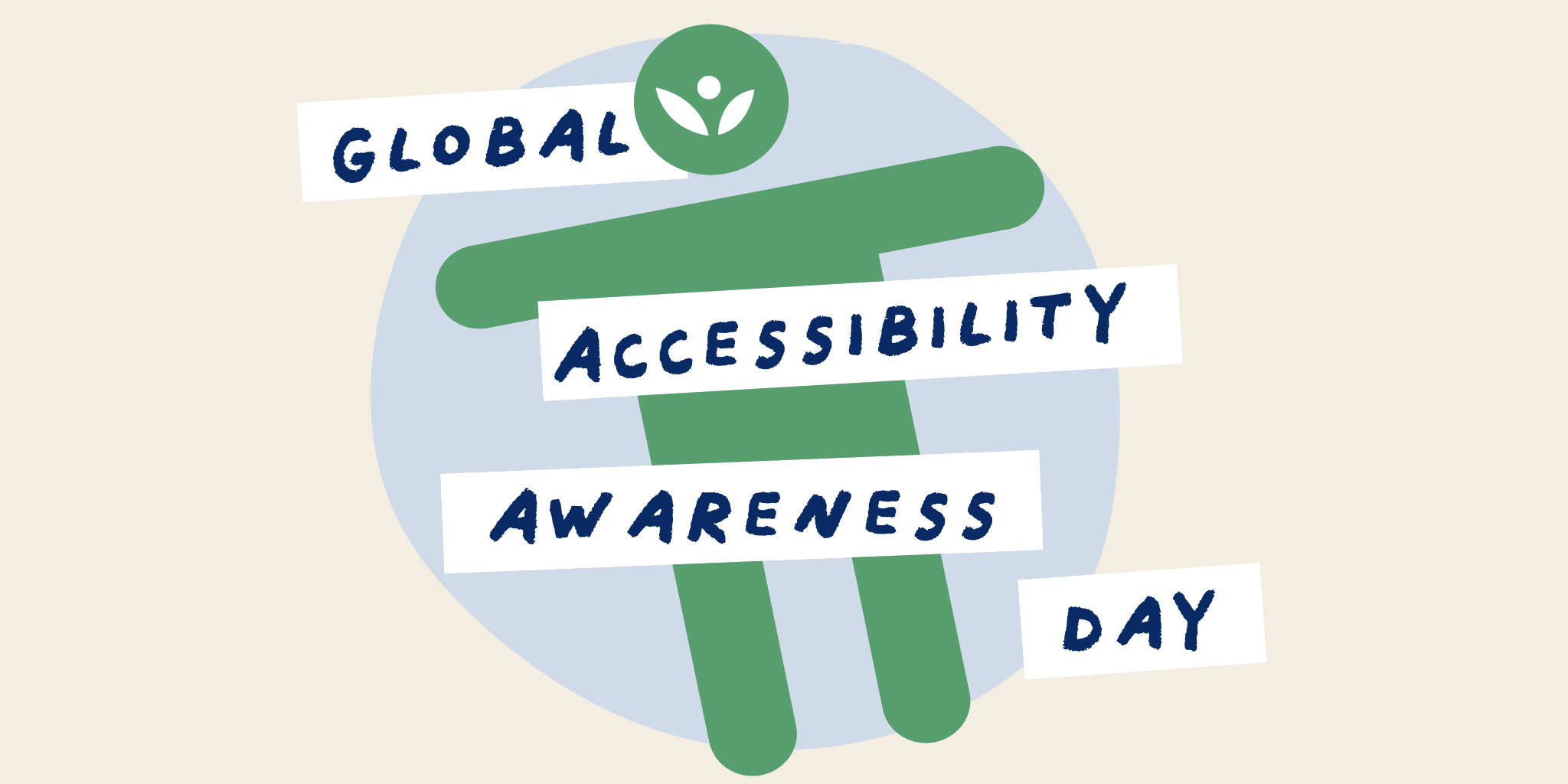
Right in the middle of all of that complexity sits Global Accessibility Awareness Day, or GAAD. And it hits differently when you understand what it actually stands for.
What Is Global Accessibility Awareness Day?
Global Accessibility Awareness Day is observed annually on the third Thursday of May. It was created with a single, clear purpose: to get people talking, thinking, and learning about digital access and inclusion. Since its founding in 2012, GAAD has grown into a worldwide moment of reflection for developers, designers, educators, policymakers, and everyday internet users alike.
The numbers that underpin GAAD are staggering. More than one billion people around the world live with some form of disability. That represents approximately 15 percent of the global population — and yet the digital world, which has become essential infrastructure for education, employment, healthcare, banking, and social connection, remains inaccessible to an enormous portion of those people.
When a website is built without screen reader compatibility, when a video lacks captions, when a mobile app cannot be navigated without a touchscreen, or when color contrast fails to meet basic readability standards, real people are locked out. Not inconvenienced — locked out. GAAD exists to make that invisible exclusion visible.
Why Digital Accessibility Is Not Optional
There is a persistent misconception that accessibility is a niche concern, something that affects only a small minority of users and therefore sits at the bottom of a product team's priority list. That misconception costs people their independence, their opportunities, and their dignity every single day.
Consider what the internet now controls access to:
- Job applications and remote work platforms
- Telehealth appointments and medical records
- Online education and academic resources
- Government services and civic participation
- Financial tools and banking systems
- News, communication, and community
When these systems are inaccessible, people with visual impairments, motor disabilities, cognitive differences, or hearing loss are not simply facing a minor inconvenience. They are being structurally excluded from modern life. Accessibility is not a feature — it is a fundamental right.
Legal frameworks around the world have begun to reflect this understanding. The Americans with Disabilities Act (ADA), the European Accessibility Act, and the Web Content Accessibility Guidelines (WCAG) set baseline standards that organizations are increasingly required to meet. But compliance and genuine inclusion are not the same thing. GAAD pushes beyond checkboxes toward a culture where accessibility is built in from the beginning, not retrofitted at the end.
The Duality That Makes GAAD Personal
What makes GAAD resonate beyond policy documents and technical audits is the human story at its center. Barker's reflection on her son's 17th birthday is not incidental to her work in accessibility — it is part of the same emotional and ethical fabric. Raising a child means constantly negotiating between protection and freedom, between what they need now and what will serve them later. Working in accessibility means holding the same tension: advocating for what users need today while building toward systems that will not require advocacy at all.
That duality — the coexistence of progress and persistent gaps, of awareness campaigns and lived daily struggle — is what gives GAAD its particular emotional gravity. Celebrating how far digital accessibility has come and acknowledging how far it still needs to go are not contradictory positions. They are both necessary and honest.
What Organizations Like Khan Academy Are Doing
Khan Academy's commitment to accessibility reflects the organization's foundational mission: a free, world-class education for anyone, anywhere. That "anyone" is meaningless if the platform itself is inaccessible to students who are blind, deaf, have dyslexia, or navigate the world with motor differences.
Accessibility work at scale involves embedding inclusive design principles across engineering, content creation, and product strategy. It means conducting regular audits against WCAG standards, investing in assistive technology testing, training content creators on captioning and alt text, and — critically — including disabled users in the research and feedback process from the very start.
This kind of work does not happen through a single awareness day. But GAAD creates a cultural moment that can accelerate internal conversations, surface new commitments, and remind teams why the work matters when the roadmap gets crowded and timelines get tight.
How You Can Participate in GAAD
You do not need to be a developer or a disability advocate to engage meaningfully with Global Accessibility Awareness Day. There are practical actions available at every level of technical experience:
- Try navigating a website you use regularly using only your keyboard, without touching the mouse, and notice where you get stuck.
- Turn on your phone's built-in screen reader — VoiceOver on iOS or TalkBack on Android — and attempt to complete a simple task.
- Audit the color contrast of a presentation or document you've recently created using a free online tool.
- Watch a video with the sound off and notice whether captions are available and accurate.
- Share accessibility resources with your team or organization and open a conversation about where your digital products currently stand.
Each of these small experiments creates empathy. And empathy, consistently applied, is what ultimately changes design culture.
Moving from Awareness to Action
Awareness is the beginning, not the destination. GAAD matters because it creates an annual checkpoint — a moment to ask whether the commitments made last year have translated into real, measurable improvements for real people. It matters because the billion-plus people who live with disabilities do not experience inaccessibility once a year in May. They experience it every time they open a browser, every time they try to use an app, every time they are told, implicitly or explicitly, that they were not considered.
May holds its contradictions with grace: the warmth and the frost, the celebration and the grief, the progress and the urgency. Global Accessibility Awareness Day belongs in that company — a day that asks us to hold both the beauty of how much has been built and the honest weight of how much work remains.
That tension is not a problem to be resolved. It is the engine of meaningful, lasting change.