
When a Classroom Tool Becomes a Global Learning Resource
What happens when a school district builds a STEM instructional series for its own students — and the rest of the world shows up to watch? That is exactly the unexpected story unfolding around Spacegate Station, a fictional space station orbiting the moon that has quietly become one of the more compelling digital STEM education success stories in recent memory. Created in 2022 by Duval County Public Schools (DCPS) in Florida, Spacegate Station was never intended to compete on YouTube. It was built to support daily classroom instruction. Yet today, its YouTube channel boasts more than 1,600 subscribers, over 196,000 views, 25,000-plus hours of watch time, and approximately 2.3 million impressions — all without a single dollar spent on marketing or promotion.
For district administrators, those numbers were impossible to ignore. They prompted a deeper examination of what was actually driving engagement, and what the broader implications might be for how school districts think about producing and distributing instructional media in the digital age.
What Is Spacegate Station?
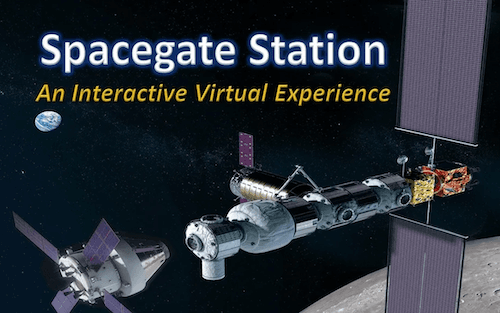
Spacegate Station is a STEM video series built around an immersive, narrative premise: a fictional space station in lunar orbit from which science, technology, engineering, and mathematics concepts are explored and taught. The storytelling framework was a deliberate design choice. Rather than producing conventional instructional videos with talking heads and slideshows, the DCPS team leaned into cinematic, character-driven content that could hold a student's attention the same way entertainment media does.
The series launched in 2022 as a response to a clear instructional need within the district. Teachers wanted high-quality, curriculum-aligned STEM content they could actually use in their classrooms without having to hunt across multiple platforms or stitch together materials that weren't built for their students. Spacegate Station was the answer — purpose-built, pedagogically grounded, and produced entirely in-house by the district's own team.
Teacher-Led Design Is the Secret Ingredient
One of the most frequently cited reasons for the series' effectiveness, both inside classrooms and among the broader YouTube audience, is that it was designed from the ground up by educators rather than by content marketers or outside production companies. Teachers were not simply consulted during development — they were drivers of the creative and instructional process. This distinction matters enormously.
When teachers lead curriculum design, the resulting content tends to reflect actual classroom realities: the vocabulary students encounter in their coursework, the misconceptions that tend to trip learners up, the pacing that fits within a typical lesson, and the kinds of examples that make abstract concepts click. Spacegate Station carries that authenticity in every episode. Viewers — whether they are third graders in Jacksonville or curious adults watching from another state — can sense when content was made by people who genuinely understand learning.
This teacher-first model also creates an important feedback loop. Educators who see their own insights reflected in the finished product are more likely to use it consistently and recommend it to colleagues, which drives both classroom adoption and organic digital reach.
The Numbers Behind the Phenomenon
To appreciate just how unusual Spacegate Station's performance is, it helps to put the metrics in context. A 4.9 percent click-through rate on YouTube is remarkable by any standard. According to data from Tubular Labs, that figure places the channel at the high end of STEM instructional content across the platform. For reference, the average YouTube click-through rate across all content categories typically falls between 2 and 5 percent, meaning Spacegate Station is outperforming most content — not just most educational content.
- 1,600+ subscribers with zero paid acquisition
- 196,000+ total views driven entirely by organic discovery
- 25,000+ hours of total watch time, indicating high viewer retention
- 2.3 million impressions, suggesting strong algorithmic distribution
- 4.9% click-through rate, at the top of the STEM content category
The watch time figure is particularly telling. Raw view counts can be inflated by accidental clicks or low-quality traffic. Watch time, on the other hand, reflects genuine engagement. Viewers are not just clicking on Spacegate Station episodes — they are staying to watch them, which tells YouTube's algorithm that the content is valuable and worth recommending to more people.
Implications for Districts Producing Instructional Media
The Spacegate Station story raises a genuinely important question for school districts across the country: should more districts invest in producing their own high-quality instructional media and distributing it on open digital platforms? The traditional answer has been no — producing video content is expensive, time-consuming, and outside a district's core competency. Spacegate Station challenges each of those assumptions.
First, the cost argument weakens considerably when districts already have subject-matter experts — their teachers — on staff. The marginal cost of producing quality instructional content is primarily one of production infrastructure and time, both of which can be managed strategically. Second, open distribution via YouTube doesn't require a marketing budget when the content itself is compelling enough to earn organic reach. And third, the visibility that comes with a successful public channel creates reputational benefits for the district, attracts attention from educators nationally, and can open doors to partnerships and grant opportunities that would otherwise be unavailable.
STEM Education Meets the Digital Attention Economy
Perhaps the deepest lesson from Spacegate Station is about the intersection of pedagogy and the digital attention economy. Students today are growing up in an environment saturated with high-production-value content competing aggressively for their attention. Educational content that ignores this reality and relies solely on curricular obligation to compel viewership will always struggle. Content that meets students where they are — visually engaging, narratively compelling, and intellectually honest — can do something more ambitious: it can make learners want to pay attention.
Spacegate Station succeeded on YouTube not despite being educational, but in part because it refused to be boring about it. The space station setting, the character-driven storytelling, and the cinematic production quality all signal to viewers that this content respects their time and their intelligence. That respect, it turns out, is remarkably good for retention metrics.
What Comes Next for Spacegate Station?
With DCPS leaders now paying closer attention to what the channel has built, the natural next questions involve scale and sustainability. Can the series expand its content library without losing the teacher-led authenticity that made it work? Can it serve as a model for other districts looking to invest in original instructional media? And perhaps most importantly, can it continue to grow its audience while remaining genuinely useful to the classroom teachers it was originally built to serve?
Those questions don't yet have definitive answers. But the foundation Spacegate Station has laid — a curriculum-first approach, teacher-led design, and an openness to sharing instructional content with the world — offers a clear and reproducible blueprint. For districts willing to invest in quality and trust the reach of open platforms, a fictional space station orbiting the moon may be showing them exactly how far good STEM education can travel.