
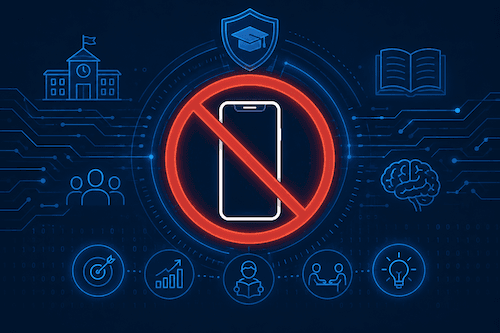
The Growing National Debate Over Cell Phones in Schools
Across the United States, a heated conversation is unfolding in school board meetings, state legislatures, and family dinner tables: What role should cell phones play in today's classrooms? It is no longer a question educators, parents, or policymakers can afford to sidestep. The explosion of smartphone usage among young people, combined with mounting research on its effects on attention spans, mental health, and academic performance, has pushed the issue to the top of the education policy agenda.
In Georgia, that conversation has reached a pivotal moment with the passage of Georgia House Bill 1009 (HB1009), a measure specifically designed to limit student cell phone use during the school day. As the bill moves to the governor's desk, it reflects a sweeping national movement. States and districts from California to New York are considering or already implementing similar restrictions, signaling a clear shift in how American education views personal devices in the learning environment.
But here is the critical question that often gets lost in the legislative rush: Is an outright ban actually the right answer, or do we need something smarter?
Why Simple Bans Fall Short
The instinct to ban cell phones entirely from school premises is understandable. Teachers report constant battles with students scrolling through social media during lessons. Mental health professionals point to the well-documented links between heavy social media use and anxiety and depression in adolescents. Administrators cite cyberbullying incidents that originate online and spill into hallways and classrooms.
Yet blanket bans come with their own set of complications. Many families rely on cell phones as a primary safety communication tool, especially in an era where school safety has become a paramount concern. Students with chronic health conditions often use their devices to manage medication schedules or communicate with parents during emergencies. Additionally, a growing number of educators are leveraging smartphones as legitimate learning tools — from quick research lookups to interactive classroom polling apps and accessibility features for students with disabilities.
When a policy swings too far in the restrictive direction, it can create an adversarial dynamic between students and staff, drive underground phone use that is harder to monitor, and strip away tools that, when used intentionally, genuinely support learning. A blanket ban treats technology as the problem itself rather than addressing how and when that technology is used.
Technology Is Not the Enemy — Unmanaged Use Is
One of the most important reframes in the current policy debate is this: technology is not the problem, but it must be carefully managed within the learning environment. This distinction matters enormously. A student using a smartphone to look up a historical fact during a research project is having a fundamentally different experience from a student who is texting friends during a math lesson. The device is the same; the context is entirely different.
A recent CoSN (Consortium for School Networking) report underscores exactly this point, emphasizing the critical importance of intentional and reliable edtech use in schools. The report argues that schools benefit most not from eliminating technology, but from building structured systems around its use — systems that align technology access with clear pedagogical goals and minimize distraction during instructional time.
This is the foundation upon which smarter cell phone policies must be built.
What Smarter Cell Phone Policies Actually Look Like
Rather than defaulting to an all-or-nothing approach, forward-thinking schools are developing tiered and context-sensitive frameworks for student device use. These models share several key characteristics:
- Defined use windows: Students are permitted to use personal devices during specific times — passing periods, lunch, and designated free periods — while devices are stored away or secured during instructional blocks. This respects the communication needs of families without allowing constant distraction during class.
- Teacher-led access decisions: Individual educators retain the authority to permit or restrict device use based on the lesson at hand. A science teacher running a virtual lab simulation may actively invite students to use their phones, while a teacher facilitating a Socratic seminar may require full device storage.
- Physical storage solutions: Many schools are investing in phone storage pouches or designated charging stations that keep devices physically accessible but out of reach during class. This reduces the temptation to check notifications while still giving students peace of mind that their device is nearby.
- Digital citizenship education: Policies alone are insufficient without accompanying instruction. Schools that embed digital citizenship curricula — teaching students to critically evaluate their own technology habits, recognize distraction patterns, and use devices responsibly — tend to see stronger long-term behavioral outcomes.
- Clear, consistent enforcement: For any policy to work, enforcement must be equitable and transparent. Inconsistent application erodes student trust and creates perceptions of unfairness, undermining the policy's effectiveness.
Involving Students and Families in the Conversation
One element that is frequently underestimated in the development of cell phone policies is the value of including students and families as stakeholders rather than treating them as subjects of the policy. When students understand the reasoning behind restrictions and have a voice in shaping acceptable use agreements, compliance rates tend to improve significantly. When parents are informed and engaged partners rather than surprised by sudden policy changes, the home-to-school consistency that makes policies sustainable is far more achievable.
Schools that have successfully navigated this issue often point to town halls, student advisory panels, and parent surveys as tools that helped build community buy-in before a policy was formally adopted.
The Broader Edtech Ecosystem
Cell phone policies do not exist in a vacuum. They are part of a larger conversation about how schools integrate and govern all forms of educational technology. As educators continue shaping the future of edtech — from AI-powered learning platforms to district-issued tablets and interactive smartboards — the principles that apply to personal device management apply broadly: intentionality, clarity of purpose, and alignment with learning outcomes.
A cell phone sitting in a student's pocket is neither an asset nor a liability until the school community decides how to treat it. Districts that take a thoughtful, evidence-informed approach to that decision will be far better positioned to harness the benefits of technology while protecting the focused, engaged learning environments that students need and deserve.
Moving Forward: From Reaction to Strategy
Georgia's HB1009 and the national wave of similar legislation represent a genuine and overdue reckoning with how schools have allowed personal devices to operate without clear guardrails. But legislation alone is not a strategy. Laws can mandate restriction; they cannot mandate thoughtful implementation.
The schools that will come out ahead are those that move beyond reactive banning and instead invest in building robust, flexible, and educationally grounded frameworks for technology use. The goal is not a school where phones are invisible, but a school where every moment of technology use — whether on a personal device, a school-issued laptop, or a classroom display — serves a clear purpose in the service of student learning.
Beyond the ban lies a smarter path forward. It will take intention, collaboration, and a willingness to treat students as capable partners in building healthier technology habits. But for the sake of both learning and student well-being, it is a path well worth taking.