
The Core Curriculum Debate: What It Means for Students, Teachers, and the Future of American Education
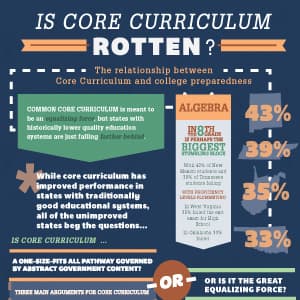
Few topics in modern American education generate as much controversy as the Common Core Curriculum. Since its introduction, the debate has spilled from faculty lounges into living rooms, from school board meetings into the halls of Congress. At its heart, the question is deceptively simple: does a standardized, nationwide set of academic expectations actually prepare students for college and career success — and does it help close the persistent achievement gap that has long plagued the U.S. education system? The answers, as it turns out, are anything but simple.
What Is the Common Core Curriculum?
The Common Core State Standards (CCSS) were developed in 2009 and 2010 through a state-led initiative designed to establish consistent, clear educational benchmarks in English language arts and mathematics for students from kindergarten through twelfth grade. The goal was straightforward: ensure that every student, regardless of zip code, receives a quality education that prepares them for life after high school.
Proponents of the standards argued that inconsistency across state curricula was a major contributing factor to the achievement gap — the well-documented disparity in academic performance between students from different socioeconomic, racial, and geographic backgrounds. By establishing a single, rigorous set of expectations, supporters believed teachers and students across the country would work toward the same measurable goals.
On paper, the logic is compelling. In practice, however, the results have been far more complicated.
The Achievement Gap: Can Curriculum Standards Solve It?
Most educational experts are skeptical that a standardized curriculum alone can close the achievement gap. The roots of academic inequality run deep, touching on issues of poverty, access to resources, teacher quality, mental health support, and systemic discrimination — challenges that a set of content standards simply cannot address on their own.
Research consistently shows that the strongest predictors of student achievement are factors outside the classroom: household income, parental education levels, access to healthcare and nutritious food, and the stability of the home environment. A child living in poverty who lacks access to books, tutors, and reliable internet faces obstacles that no curriculum reform can overcome without accompanying social and economic investment.
This is not to say that curriculum standards are irrelevant. High expectations matter, and clear benchmarks can guide teachers in delivering consistent, quality instruction. But framing Common Core as a primary solution to the achievement gap places an unrealistic burden on educational standards while diverting attention — and funding — from the deeper structural issues that perpetuate inequality.
College Preparedness: Are Students Ready?
One of the central promises of Common Core was improved college readiness. The standards were specifically designed to align with the expectations of first-year college courses, meaning that a student who mastered the CCSS benchmarks should, in theory, be equipped to succeed in higher education without needing remedial coursework.
This is an especially pressing issue. Studies have long shown that a significant percentage of incoming college freshmen require remedial classes in math or English — courses that cost money, delay progress toward a degree, and increase the likelihood of dropping out. If Common Core could meaningfully reduce remediation rates, that alone would represent a significant victory for students and institutions alike.
Early data on Common Core's impact on college readiness has been mixed. Some states have reported modest improvements in college enrollment and persistence rates among students who went through the full CCSS framework. Other researchers have found little to no measurable difference compared to pre-Common Core cohorts. The challenge lies in isolating the effect of the curriculum standards from the dozens of other variables that influence whether a student succeeds in college.
The Political Problem: When Policy Outpaces Evidence
Perhaps the most frustrating aspect of the Common Core debate is the role of politics. Education policy in the United States is ultimately shaped by elected officials — state legislators, governors, school board members, and members of Congress — whose decisions are influenced as much by ideology and public opinion as by peer-reviewed research.
Common Core became a flashpoint in the broader culture wars, drawing opposition from both the political left and right. Conservative critics argued it represented federal overreach into what should be a local and state responsibility. Progressive critics worried that the standards were too closely tied to high-stakes standardized testing, which they argued disadvantaged minority students and narrowed the curriculum by incentivizing teachers to "teach to the test."
As a result, several states that initially adopted the standards later repealed or modified them — not necessarily based on evidence of their effectiveness or ineffectiveness, but in response to political pressure. This creates a deeply unstable educational landscape in which students, teachers, and administrators are subject to constant policy shifts that make long-term planning and improvement nearly impossible.
What Teachers and Parents Are Actually Saying
On the ground level, reactions to Common Core have been equally divided. Many teachers have praised the standards for providing clearer instructional targets and encouraging deeper conceptual understanding over rote memorization — particularly in mathematics, where Common Core emphasizes problem-solving strategies and mathematical reasoning over simple computation.
However, many parents have expressed frustration, particularly with Common Core math methods that differ significantly from the approaches they learned as children. This disconnect can make it difficult for parents to support their children's homework and learning at home, inadvertently widening rather than narrowing gaps in support between students from different backgrounds.
Looking Beyond Standards: A More Comprehensive Approach
If curriculum standards cannot close the achievement gap on their own, what will? Experts across the political spectrum increasingly agree that meaningful educational equity requires a multi-pronged approach that includes:
- Increased investment in early childhood education, which consistently demonstrates the highest returns in terms of long-term academic and social outcomes.
- Equitable school funding models that do not rely heavily on local property taxes, which perpetuate resource disparities between wealthy and low-income communities.
- Robust teacher recruitment, training, and retention programs that ensure every student has access to highly qualified, well-supported educators.
- Wraparound social services that address the non-academic barriers to learning, including mental health support, nutrition programs, and family engagement initiatives.
- Culturally responsive curriculum that reflects the diverse backgrounds and experiences of all students, fostering engagement and a sense of belonging.
Conclusion: Standards Are a Tool, Not a Solution
The debate about the Core Curriculum is, at its core, a debate about what we believe education is for and who we believe it should serve. Common Core Standards are neither the villain some critics portray nor the silver bullet its most ardent supporters once promised. They are a tool — one that can support quality teaching and clear expectations, but only if implemented thoughtfully, funded adequately, and accompanied by the broader social investments that students in every community deserve.
Until politicians and policymakers are willing to have that harder, more honest conversation — one that goes beyond curriculum standards and confronts the structural inequalities that shape educational outcomes — the achievement gap will persist, and the promise of equal opportunity in American education will remain just that: a promise.