
You Already Know Thousands of Spanish Words
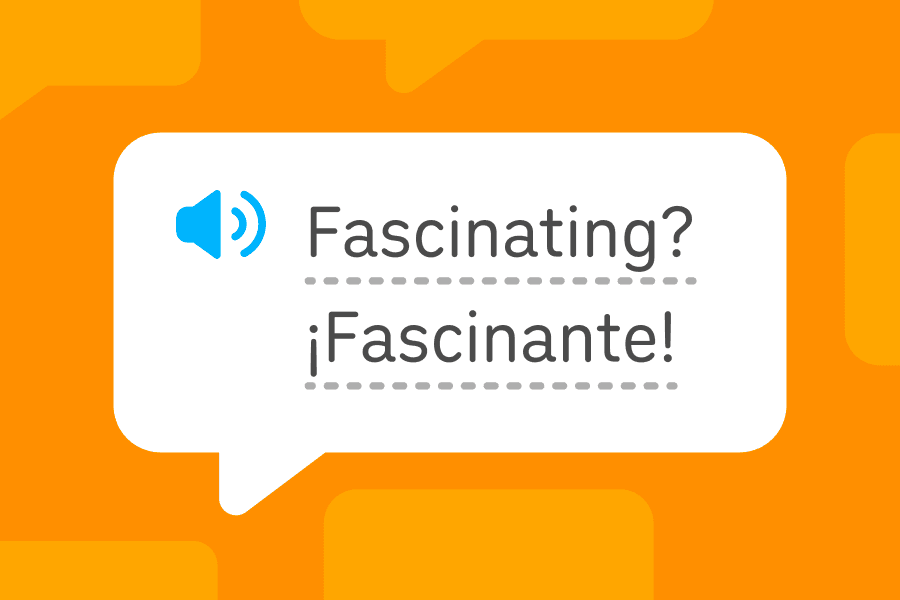
Here's a fact that might completely change how you think about learning Spanish: English and Spanish share somewhere between 10,000 and 15,000 cognates. That's potentially 15,000 words whose meanings you can already guess without ever opening a textbook. ¡Qué fascinante! — and yes, if you just understood that, you've already met your first cognate.
Cognates are one of the most powerful and underused tools available to English-speaking learners of Spanish. Once you understand what they are, how to spot them, and how to apply predictable patterns, you'll find that building Spanish vocabulary becomes dramatically faster and far less intimidating.
What Is a Cognate?
The word cognate is used in two distinct ways, depending on context. In the strictest linguistic sense, cognates are words in related languages that share a common ancestor — that is, they both descended from the same word in a parent language. Spanish and French, for example, are both Romance languages that evolved from Latin, so many of their words share roots and therefore qualify as true cognates in this technical sense.
In everyday language learning, however, the word cognate is used more broadly to describe any two words across different languages that look or sound similar and share the same meaning — regardless of whether they share a historical root. For learners, this broader definition is the more useful one, because it captures all the words you can recognize and leverage right away.
Spanish and English have a particularly rich overlap of cognates because English borrowed heavily from Latin and French throughout its history, especially after the Norman Conquest in 1066. That shared Latin heritage is why so many academic, scientific, and formal English words have near-identical counterparts in Spanish.
How Can Cognates Help You Learn Spanish Faster?
The practical value of cognates for language learners is enormous. When you encounter a Spanish word that closely resembles an English word you already know, your brain can immediately connect the two — no rote memorization required. This makes your learning more efficient and far more enjoyable.
Consider these examples: hospital, animal, color, actor, natural. In Spanish, these words are spelled identically or nearly identically to their English counterparts, and they carry the same meaning. You already knew them. The same goes for words like universidad (university), artista (artist), conversación (conversation), and televisión (television).
By training yourself to recognize cognates, you essentially gain a running start in any new vocabulary area. Whether you're reading a Spanish news article, watching a film, or holding a basic conversation, cognate recognition allows you to piece together meaning even when your overall proficiency is still developing.
Patterns in Spanish Cognates
One of the best strategies for using cognates is learning to recognize predictable suffix patterns. Certain English word endings almost always have a corresponding Spanish ending, and once you internalize these patterns, you can apply them across hundreds — even thousands — of new words.
- -tion → -ción: English words ending in -tion almost always become -ción in Spanish. So nation becomes nación, situation becomes situación, and education becomes educación.
- -ty → -dad: English words ending in -ty typically become -dad in Spanish. University becomes universidad, liberty becomes libertad, and nationality becomes nacionalidad.
- -ous → -oso/-osa: The English adjective ending -ous usually corresponds to -oso or -osa in Spanish. Famous becomes famoso, curious becomes curioso, and generous becomes generoso.
- -ist → -ista: Professional or identity words ending in -ist in English typically end in -ista in Spanish. Artist becomes artista, journalist becomes periodista, and tourist becomes turista.
- -al → -al: This one is easy — many English words ending in -al are identical or nearly identical in Spanish. Think natural, cultural, normal, digital, and central.
Memorizing these patterns is genuinely one of the highest-return investments you can make as a Spanish learner. A few hours studying cognate patterns can unlock access to an enormous portion of the Spanish lexicon.
Watch Out for False Cognates
Of course, not every word that looks similar means the same thing — and this is where learners need to stay alert. False cognates, sometimes called false friends, are words that look alike across two languages but have different meanings. They can lead to some genuinely embarrassing misunderstandings.
A classic example is the Spanish word embarazada. It looks a lot like embarrassed, but it actually means pregnant. Similarly, sensible in Spanish means sensitive, not sensible in the English sense. And actual in Spanish translates to current or present-day, not actual as English speakers use it.
The good news is that false cognates are relatively rare compared to the vast number of true cognates. Simply being aware that they exist — and double-checking when something seems a little off — is usually enough to avoid confusion.
Examples of Cognates in Spanish and English
To give you a concrete sense of how many cognates already exist in your vocabulary, here's a sampling of Spanish-English cognate pairs across different categories:
- Everyday nouns: hotel, hospital, doctor, animal, radio, taxi, plaza, piano
- Academic and professional vocabulary: universididad, economía, filosofía, biología, democracia, sistema
- Descriptive adjectives: elegante (elegant), importante (important), horrible (horrible), posible (possible), popular (popular)
- Action verbs: admitir (to admit), decidir (to decide), visitar (to visit), practicar (to practice)
Each of these words requires virtually zero effort to learn for an English speaker. You already have them. Your job is simply to recognize them and start using them confidently.
How to Practice Recognizing Cognates
The most effective way to build your cognate recognition skills is through consistent exposure to Spanish content. Reading Spanish articles, watching Spanish-language films or news programs, and using language learning apps that introduce vocabulary in context will all help you spot cognates naturally over time.
When you encounter a new Spanish word, make it a habit to ask yourself: does this look or sound like any English word I know? More often than you might expect, the answer will be yes — and that moment of recognition is one of the most satisfying parts of learning a language.
Cognates won't get you to fluency on their own, but they are an incredible launching pad. Lean into them early, learn the key patterns, stay cautious of false friends, and let those thousands of familiar words give you the confidence to keep going.